Key Trends Shaping the Future of Field Service
article.updatedAt.label
June 02, 2026
Estimated reading time
4 minutes
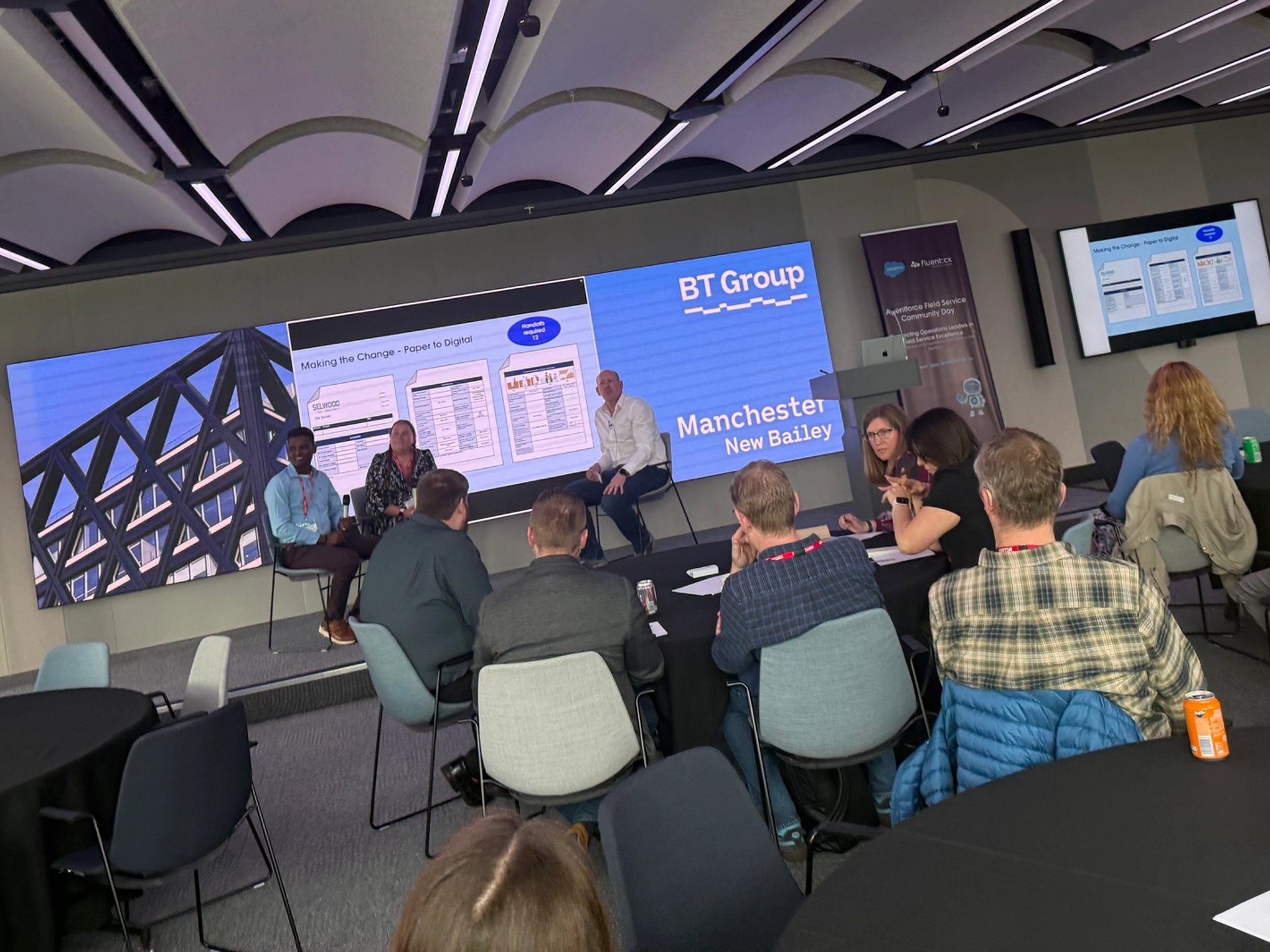
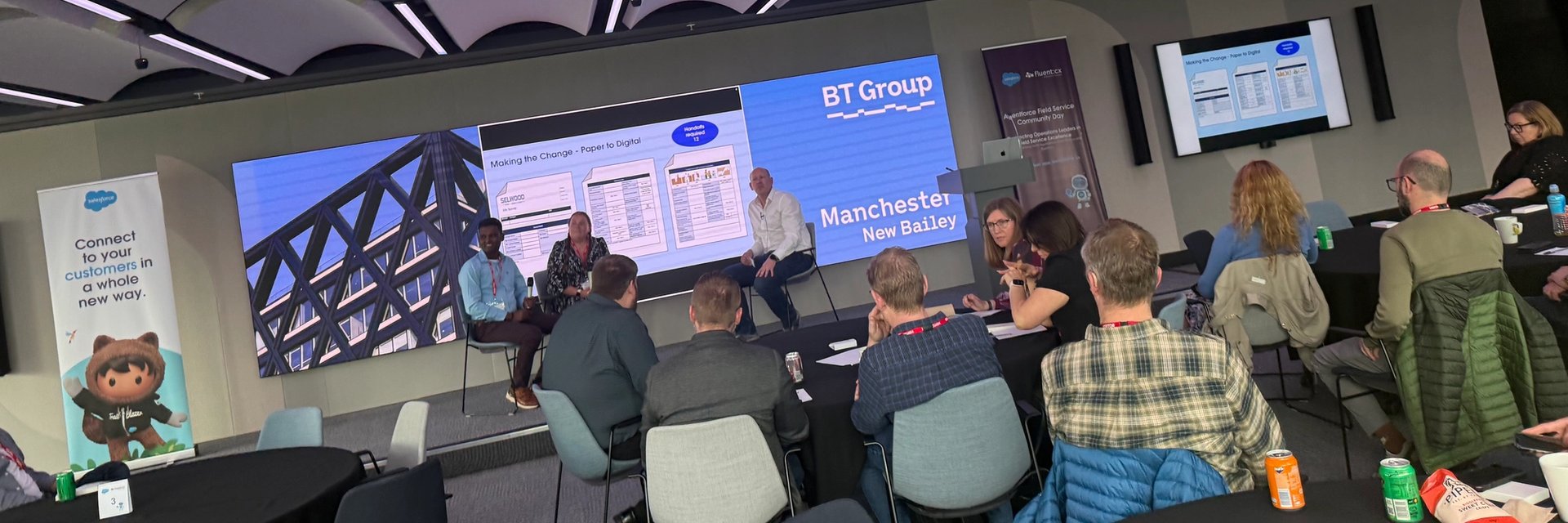
On 7 May 2026, fluent:cx, together with Salesforce and BT Group, hosted an exclusive customer roundtable session at our recent Field Service Community event in Manchester, bringing together service, operations and digital leaders from major organisations across multiple sectors including Energy & Utilities, Food & Beverage and Automotive.
The event focused on open peer-to-peer discussions about the biggest challenges facing modern field service organisations today.
The discussions highlighted three key themes shaping the future of field service.
1. Building Trust Between Frontline and Back Office
Technology only creates value when teams work together effectively and trust one another. Yet for many organisations, this remains a significant challenge. Field technicians and back-office teams often only see their part of the process, leading to inaccurate KPIs, incomplete data and a limited understanding of shared systems and platforms.
One particularly effective approach discussed was the use of ride-along sessions, where dispatchers spend time alongside technicians in the field to better understand their day-to-day realities. These experiences often create stronger alignment than traditional training programmes.
Short release cycles combined with direct feedback loops also help drive adoption and demonstrate visible progress. At the same time, models such as gradually introducing self-assignment of jobs can strengthen ownership and accountability among field teams.
One thing became very clear during the discussion: trust is not built through top-down communication alone. It requires active listening, fast responses and continuous collaboration between frontline and back-office teams.
2. Driving Adoption of New Capabilities
Almost every organisation represented at the event already has access to AI and optimisation technologies. However, adoption still lags far behind the potential these solutions can deliver. Common barriers include scepticism towards automated recommendations, concerns about changes to established ways of working and limited resources to continuously improve systems.
Smaller teams in particular often lack the capacity needed to properly support and sustain the rollout of new capabilities. Participants also highlighted a noticeable difference between experienced employees and newer colleagues: while new starters often embrace change quickly, long-standing employees can be more cautious.
Many organisations are seeing success with gradual change strategies focused on visible benefits. Several participants described using a champions model involving supporters, neutral stakeholders and sceptics from the outset. Interestingly, sceptics often become some of the most credible advocates once they are actively involved in the process.
Regular open sessions and knowledge-sharing forums also help build confidence and trust around new capabilities. The group broadly agreed that sustainable change happens step by step, not through large-scale rollouts.
3. Data Readiness
Data remains one of the most persistent challenges in field service. In many organisations, information is spread across multiple systems, synchronised with delays or duplicated across different platforms.
Participants described fewer issues with individual systems themselves and more challenges integrating platforms. Multiple data sources, duplicate records and limited transparency continue to slow processes and decision-making.
Despite the amount of data available, predictive maintenance is still rarely implemented at scale, meaning many organisations continue to operate reactively. At the same time, overly strict validation rules can prevent important field information from being captured and create unnecessary friction for frontline teams.
The common goal remains clear: getting the right data to the right technician at the right time.
Conclusion
The discussions in Manchester highlighted that field service transformation is about far more than technology alone. Successful transformation happens step by step and depends on delivering tangible value along the way. The biggest opportunities lie in stronger collaboration, organisational trust and clean, reliable data foundations before AI and optimisation technologies can deliver their full potential.
Organisations investing today in reducing fragmentation and building trusted data foundations will be best positioned to unlock the full value of AI-driven and predictive operations.
fluent:cx would like to thank all participants for the open and insightful discussions, as well as Salesforce and BT Group for their partnership in delivering the event.

Would you like to continue the conversation?
Register for our post Salesforce Agentforce World Tour Networking Drinks on June 18.

Turning complex challenges into opportunities for growth and success.
No problem is too complicated—we identify the hidden potential in every challenge. By transforming obstacles into actionable strategies, we help your business thrive in a competitive market. Check out our dedicated Field Service Page for more relevaent content!